Visibility Matters: How Blood Link Is Changing the Value of Being a Blood Donor
Donors should not become visible only during emergencies. How Blood Link aims to keep donors connected, recognized, and part of a lasting network.
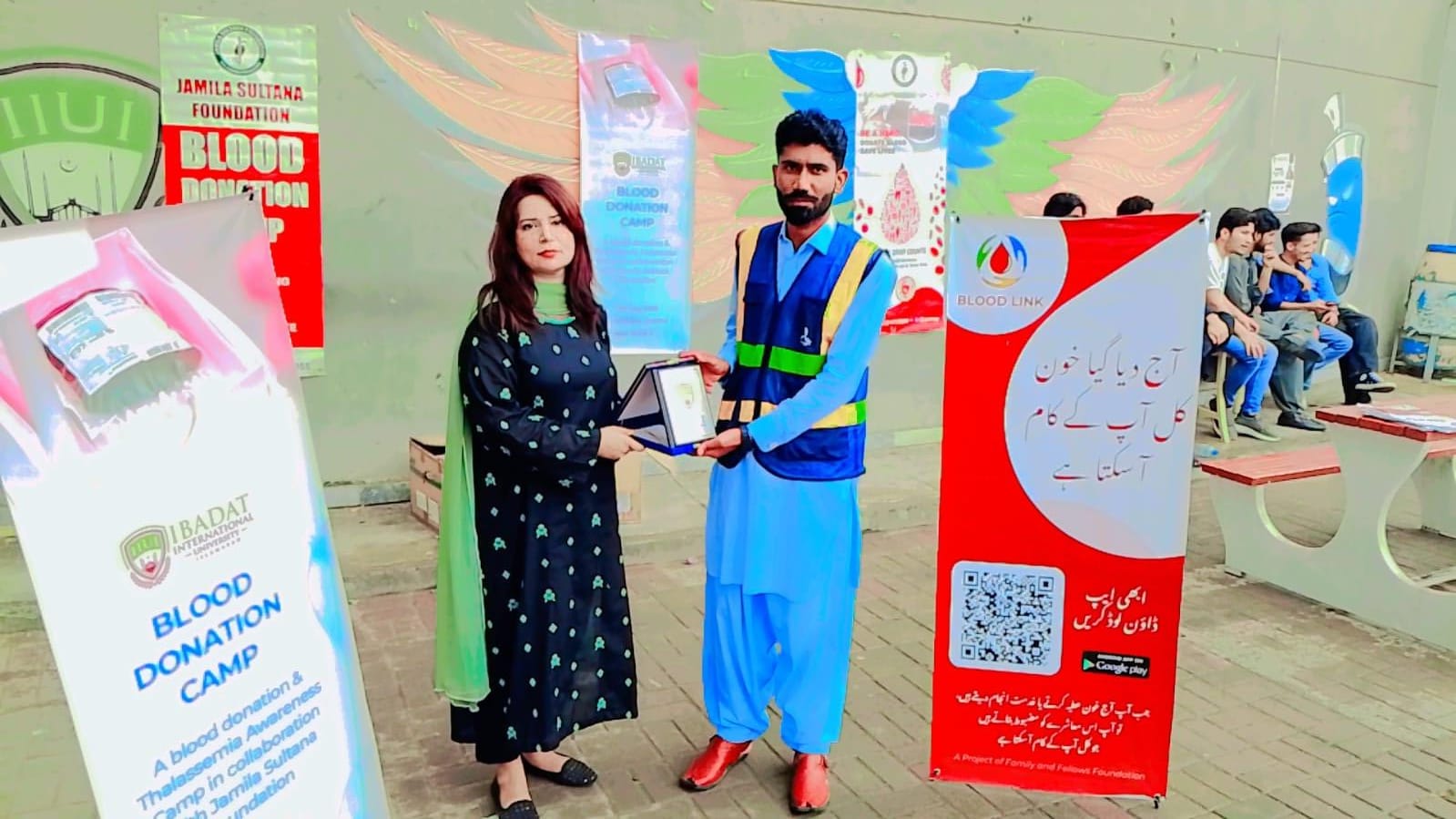
A person donates blood.
The donation is recorded.
Perhaps their name is entered into a register. Perhaps their phone number goes into a spreadsheet. Perhaps they receive a thank-you message.
And then, often, the story ends.
Months later, another patient needs blood.
Someone begins searching through old records.
A volunteer opens a spreadsheet.
A WhatsApp group is searched.
Phone numbers are called.
Someone asks:
"Does anyone know a donor?"
This is one of the quiet weaknesses in the way blood donation is often organised.
We are very good at counting donations.
We are not always as good at building relationships with donors.
A donor should not become visible only when someone needs their blood.
A donor should remain part of a network.
That is one of the ideas behind Blood Link.
A Blood Donor Is More Than a Name on a List
Traditional donor records often reduce a person to a few pieces of information:
Name.Blood group.Phone number.
That information is necessary.
But it does not tell the complete story.
It does not tell us whether the person has donated before.
It does not show their contribution to the community.
It does not necessarily help keep them engaged.
And it does not turn the person into an active member of a donor network.
A donor is not simply a unit of blood waiting to be requested.
A donor is a person who has made a decision:
"I am willing to help another person when I can."
That decision has value even when the donor is not actively donating.
The challenge is building a system that can preserve and strengthen that willingness over time.
The Problem With Being Visible Only During an Emergency
Imagine someone donated blood last year.
At the time, they were healthy, available and willing to help.
Their information was recorded.
But nothing happened afterwards.
No engagement.
No contribution history.
No reminder that they are part of a larger community.
No way to see how their contribution fits into the bigger picture.
Then, eighteen months later, someone needs their blood group.
The organisation searches for them.
But perhaps the number has changed.
Perhaps they have moved.
Perhaps they no longer remember registering.
Perhaps they never hear about the request.
The problem is not necessarily that the donor stopped caring.
The problem may be that the relationship was never maintained.
A donor network cannot be built by collecting phone numbers alone.
From Donor List to Donor Identity
This is where the concept of a persistent donor identity becomes important.
A donor should be more than an entry in a database.
They should have an ongoing presence within the donor network.
That can include information such as:
- their blood group
- their donor profile
- their contribution history
- their participation in the network
- relevant donation information
- their willingness to be contacted for genuine requirements
This does not mean making someone's private information publicly available.
Quite the opposite.
A responsible donor network must respect privacy and consent.
The purpose is to create structured visibility within an appropriate system, not unrestricted public exposure of personal information.
Visibility Is Not the Same as Publicity
This distinction matters.
When we talk about making donors "visible," we are not suggesting that everyone's phone number, identity or personal information should be displayed publicly.
Visibility means that a donor's willingness to contribute can be appropriately recognised within the network.
It means that when a genuine need arises, the system has a better chance of identifying suitable donors.
It means that the donor's contribution does not disappear after the day of donation.
And it means that donors can see themselves as participants in something larger than an isolated emergency.
Visibility should create connection - not compromise privacy.
What Happens When a Donor Becomes Part of a Network?
There is a psychological difference between these two experiences:
"I donated blood once."
and:
"I am a blood donor."
The first describes an event.
The second describes an identity.
That distinction can matter.
When people begin to see themselves as part of a community of voluntary donors, donation can become something they are more likely to consider again.
Instead of responding only when a relative or friend needs blood, they may begin thinking about regular voluntary donation.
Instead of seeing their donation as an isolated act, they can see it as a contribution to a continuing community effort.
The objective is not to pressure people into donating.
It is to help build a culture in which being a donor becomes part of how people participate in their communities.
Recognition Changes the Way Contributions Are Remembered
There is another important element:
recognition.
Imagine two donors.
The first donates three times over several years.
Each donation disappears into a record somewhere.
The second also donates three times.
But each contribution is recorded as part of a continuing donor history.
The donor can see that they have contributed repeatedly.
They can look back and understand their participation.
The difference is not in the blood that was donated.
The difference is in whether the contribution was remembered.
Recognition does not have to mean money.
In voluntary blood donation, financial incentives can undermine the principle of voluntary, non-remunerated donation and are not the model Blood Link seeks to promote.
Recognition can instead mean:
- acknowledgement
- contribution history
- certificates
- milestones
- appreciation
- community recognition
or simply making a donor's contribution visible to them.
Sometimes people do not need a reward.
They need evidence that what they did mattered.
Why Recognition Can Help Retain Donors
Recruiting a donor is only the beginning.
The more difficult challenge is often retention.
A person may donate once because:
- a friend asked them
- a family member needed blood
- their university organised a blood camp
- their workplace encouraged donation
or they simply happened to be available.
But how do we turn that first donation into a long-term relationship with voluntary blood donation?
There is no single answer.
But recognition can contribute.
If a donor can see their contribution as part of an ongoing journey, the psychological experience is different from making a donation that is immediately forgotten.
The message becomes:
"You are not just someone who donated once. You are part of this network."
That sense of belonging can be valuable.
The Difference Between Recruitment and Retention
Blood-donation campaigns often focus heavily on recruitment.
Posters say:
"Donate blood today."
Social media campaigns ask:
"Can you donate?"
Blood camps recruit hundreds of people.
All of this is important.
But there is another question:
What happens to those people afterwards?
If 500 people donate at a blood camp and 500 names are added to a spreadsheet, the organisation has acquired 500 donor records.
But has it acquired 500 long-term donors?
Not necessarily.
The real value lies in what happens next:
Registration -> Donation -> Recognition -> Engagement -> Retention -> Future Donation
That is a relationship.
And relationships require continuity.
A Donor Network Should Remember Its Donors
Think about the difference between a notebook and a network.
A notebook can tell you:
"Ahmed - O positive - 03XXXXXXXXX."
A network can tell you much more.
It can help establish:
- who has volunteered
- what their blood group is
- whether they have contributed before
- what their contribution history looks like
- whether they are part of the active donor community
- when a genuine requirement may be relevant to them
The difference is not simply technological.
It is conceptual.
One stores information.
The other creates relationships around information.
That is the direction in which Blood Link is being developed.
When Visibility Becomes Useful During an Emergency
Now consider the other side of the equation.
A patient needs blood.
Instead of starting with:
"Does anyone know a donor?"
the system can start with:
"Which suitable donors are part of the network?"
This changes the starting point.
The donor already exists.
The willingness to help already exists.
The challenge becomes connecting the two sides.
A structured network can help identify potentially relevant donors based on information such as blood group and location, subject to the appropriate verification and eligibility processes.
This does not guarantee that a donor will respond.
It does not guarantee that a donor is medically eligible at that moment.
It does not guarantee that every request will be fulfilled.
But it can improve one critical thing:
the visibility of potential donors when they are needed.
The Donor Who Lives Nearby Matters More Than a Donor Who Exists Somewhere
Blood donation is also geographically sensitive.
Knowing that someone with a particular blood group exists somewhere in the country is not necessarily useful during an emergency.
The relevant questions may be:
Where is the donor?
Where is the hospital?
Can the donor realistically reach the location?
This is why location-aware donor networks can be more useful than static donor lists.
A donor's existence matters.
Their relevant availability matters even more.
Blood Link's approach is built around connecting genuine blood requirements with suitable donors within the relevant network rather than simply presenting a large, undifferentiated list of people.
Donor Visibility Also Creates Responsibility
There is an important balance here.
A donor should not be treated as permanently available simply because they once registered.
Being part of a donor network does not mean:
"This person must donate whenever requested."
People have jobs.
Families.
Travel.
Health issues.
Medical restrictions.
Personal circumstances.
And there will be times when a donor simply cannot help.
A responsible system therefore treats registration as willingness to be considered, not an unlimited obligation.
The donor remains a person with agency.
The system's job is to make an appropriate connection possible.
The Value of a Contribution History
A contribution history can serve several purposes.
For the donor, it provides a record of participation.
For organisations, it helps understand donor engagement.
For the wider network, it can demonstrate that voluntary donation is not just about one-time campaigns.
And for communities, it can create visible examples of sustained civic contribution.
Imagine a donor being able to look back and see:
1 donation.
Then:
2 donations.
Then:
3 donations.
The number itself is not the point.
The story behind the number is.
It represents repeated decisions to help someone else.
That is something worth recognising.
Recognition Should Not Become Competition
There is also a danger in overdoing recognition.
Blood donation should not become a contest over who has the highest number of donations.
People have different health circumstances.
Different opportunities.
Different eligibility intervals.
Different capacities to participate.
A donor who has donated once should not feel that their contribution is somehow insignificant because another person has donated ten times.
Recognition should therefore encourage participation without creating unhealthy competition.
The message should be:
Every eligible contribution matters.
Not:
"You are valuable only if you donate more than someone else."
The Same Principle Applies to Volunteers
The idea of visibility extends beyond donors.
The person who helps find the donor also contributes.
The volunteer who follows up with a family contributes.
The person who transports a donor contributes.
The person who maintains donor information contributes.
These contributions can also become invisible if the system records only the final blood donation.
A mature blood-donation ecosystem should therefore recognise the different people who make successful donations possible.
This is particularly important for volunteer retention.
When people can see that their contribution is recognised, documented and meaningful, they are less likely to feel that their effort simply disappears into the background.
Technology Can Make Contributions Visible
This is one of the opportunities technology creates.
A paper register can record a donation.
A digital system can build a history.
A messaging group can announce a request.
A structured platform can track the request and its outcome.
A volunteer can say:
"I helped with that emergency."
A structured system can eventually provide evidence of that contribution.
The technology does not create the contribution.
It preserves it.
That distinction is important.
The purpose of digitalisation is not to make people feel like numbers.
It is to prevent meaningful contributions from being forgotten.
Blood Link: From Registration to Participation
Blood Link is being developed around this broader understanding of the donor relationship.
The objective is not simply:
Register donor -> store blood group -> wait for emergency.
The longer-term idea is:
Register -> become part of the network -> remain visible -> contribute -> have contributions recognised -> remain connected -> contribute again when eligible and willing.
That is a very different model.
It treats the donor as a participant rather than a database entry.
Building a Donor Identity
A donor identity can create continuity.
Instead of every donation being treated as a separate event, the system can connect contributions to the same donor over time.
This creates a record of participation.
It can help organisations understand their donor base.
And it can give donors something that traditional systems often fail to provide:
a sense that their contribution belongs to a continuing story.
The person does not simply disappear after donating.
They remain part of the network.
From Individual Donor to Community Resource
One donor cannot solve a blood shortage.
But one donor can become part of a network.
That network can include hundreds or thousands of people.
The strength of the network comes not merely from the number of registrations but from the connections between them.
A donor in Lahore.
Another in Islamabad.
Another in Rawalpindi.
Another in Karachi.
Another in a university community.
Another who regularly participates in blood camps.
Another who responds to emergency requests.
Individually, each represents one person.
Together, they represent community capacity.
That is the larger value of a donor network.
Visibility Creates a Different Kind of Incentive
Blood donation should remain voluntary.
A donor should not need money to justify helping another human being.
But human beings are social.
We respond to appreciation.
We value belonging.
We remember experiences.
We like knowing that our contribution made a difference.
This does not make voluntary donation less altruistic.
It recognises a basic reality:
People are more likely to remain connected to causes when they can see their place and contribution within them.
Recognition is therefore not a payment for blood.
It is acknowledgement of service.
That distinction is central to the philosophy behind Blood Link.
What If Every Donor Could See Their Place in the Bigger Picture?
Imagine a donor who knows:
I am part of a voluntary donor network.
My blood group is known.
My contribution history is recorded.
I can be reached when a relevant genuine request arises.
My previous donations are remembered.
My contribution is recognised.
I am one part of a much larger community.
That is a fundamentally different relationship from:
"My name is somewhere in a spreadsheet."
And it is precisely the kind of relationship that modern technology can help create.
The Goal Is Not More Notifications
There is another important distinction.
The objective of Blood Link is not to bombard donors with every blood request.
That would quickly create another form of fatigue.
If donors receive irrelevant notifications repeatedly, they may begin ignoring all of them.
A useful network needs relevance.
The right donor.
The right blood requirement.
The appropriate location.
The appropriate circumstances.
And communication that respects the donor's choice.
Better visibility should mean better relevance - not more noise.
Better Visibility Can Improve the Entire Ecosystem
When donors are properly connected, several things can improve simultaneously.
For donors
Their contribution becomes visible and meaningful.
For patients and families
There is a structured network through which potential donors can be reached.
For volunteers
Less time can be spent searching blindly through contact lists.
For organisations
Donor participation can be recorded and understood over time.
For the wider community
Voluntary blood donation becomes something people can participate in continuously rather than only during emergencies.
This is why donor visibility is not merely a user-interface feature.
It is an operational capability.
A Blood Donor Should Not Disappear After the Donation
Perhaps this is the simplest way to describe the problem.
Someone gives blood.
We say thank you.
And then we forget them.
Until we need them again.
A better system should remember.
It should remember the donor's contribution.
It should preserve their place in the network.
It should make appropriate future mobilisation possible.
It should recognise continued participation.
And it should allow the donor to remain connected even when no emergency exists.
Because the strongest donor is not necessarily the person who appears during the crisis.
It is the person who has already chosen to be part of the solution.
From Visibility to a Culture of Voluntary Donation
Ultimately, Blood Link is not only about helping someone find a donor today.
The larger objective is to help build a culture in which voluntary blood donation becomes a continuing form of community participation.
A culture where people do not wait until a relative is admitted to hospital before thinking about blood.
A culture where becoming a donor is something people are proud to be associated with.
A culture where previous contributions are remembered.
A culture where volunteers are recognised.
A culture where donors are connected rather than isolated.
And a culture where technology supports human generosity instead of allowing that generosity to disappear into disconnected lists and conversations.
Every Donor Has a Story
Many people never join because of fear or incomplete information. Visibility helps after someone joins; facts help before they do. Behind every donor record is a person.
Someone who decided to help.
Someone who took time out of their day.
Someone who went to a blood centre or hospital.
Someone who may have donated for a stranger.
Someone who may have done it repeatedly.
That contribution deserves more than a row in a spreadsheet.
It deserves to be remembered.
It deserves to be connected to a community.
And when the donor is willing, it deserves to remain visible when another person needs help.
A donor should not become visible only when their blood is needed.
They should be visible because they have chosen to be part of a community that is willing to help.
That is the difference between a donor list and a donor network.
And that is the direction in which Blood Link is being built.