Beyond an App: Building a Technology-Enabled Blood Donation Ecosystem
Blood donation is not only an app problem. Learn how Blood Link is building a technology-enabled ecosystem across donors, organisations, volunteers, and institutions.
For years, technology has been presented as the answer to almost every social problem.
Need education? Build an app.
Need healthcare? Build an app.
Need donations? Build an app.
Need blood donors?
Build another app.
But blood donation is not an app problem.
And it is not simply a donor problem either.
It is a system problem.
A patient needs blood. A donor is willing to help. A volunteer is ready to coordinate. A hospital has a requirement. An organisation has hundreds of donor records. A university can recruit thousands of young people. A blood bank has operational data.
All of these pieces exist.
The challenge is that they often exist separately.
Donors may be recorded in spreadsheets.
Requests may arrive through WhatsApp.
Volunteer coordination may happen through phone calls.
Donation histories may remain in paper registers.
Organisations may have valuable donor databases that are difficult to maintain.
Information about emerging needs may remain scattered across different sources.
And when an emergency happens, people attempt to connect all these disconnected pieces manually.
That is the problem we are trying to address.
Blood Link is not being built simply as another blood-donation app.
It is being developed as part of a broader attempt to build a technology-enabled blood-donation ecosystem.
The Blood Donation System Is Bigger Than the Donation
The most visible part of blood donation is the moment when a donor gives blood.
But that is only one point in a much larger process.
Consider everything that has to happen before a successful donation:
A donor must be recruited.
Their information must be recorded.
The information must remain usable.
The donor must remain connected.
A blood requirement must emerge.
The requirement must be communicated.
A suitable donor must be identified.
The donor must be contacted.
The donor must be willing and eligible to donate.
The donor must be able to reach the appropriate facility.
The donation must take place.
The outcome should ideally be recorded.
And the donor should remain part of the network afterwards.
That is not one problem.
It is an ecosystem.
And when any one of these layers is weak, the entire response can suffer.
A Donor Database Is Not an Ecosystem
Many organisations already have something extremely valuable:
donor data.
Names.
Phone numbers.
Blood groups.
Donation histories.
Camp records.
Registration forms.
Thousands of people may have expressed a willingness to donate.
But a database sitting on a computer does not automatically become an active donor network.
Imagine an organisation has 5,000 historical donor records.
What happens when an emergency request for a particular blood group arrives?
Someone may have to open a spreadsheet.
Filter the blood group.
Start calling numbers.
Discover that some numbers no longer work.
Find that some donors have moved.
Discover that others are unavailable.
Call more people.
Send messages.
Wait for responses.
Record the outcome somewhere else.
This is not a failure of the donors.
It is a limitation of the infrastructure surrounding them.
Data must become operationally useful.
That requires systems.
The First Layer: Organising the Donor
Before donors can be effectively mobilised, organisations need to know who their donors are.
This sounds obvious.
In practice, it can be surprisingly difficult.
Blood-donation organisations may maintain information across:
- Excel spreadsheets
- paper registers
- online forms
- WhatsApp conversations
- blood-camp records
- hospital records
- individual staff computers
- disconnected databases
Over time, information becomes fragmented.
A donor may appear in multiple lists.
A phone number may change.
A donation may not be recorded.
A new donor may never make it into the main database.
An organisation may know that it has thousands of donors but struggle to answer basic operational questions about them.
This is why the first layer of the ecosystem is donor management.
Blood Donor OS: Giving Organisations Better Infrastructure
This is one of the reasons we are developing Blood Donor OS.
Blood Donor OS is designed as an organisational donor-management system that can help organisations move beyond scattered registers and spreadsheets.
Its role is different from Blood Link.
It is not primarily about sending an emergency request to a donor.
It is about helping an organisation manage the information behind its donor network.
That includes areas such as:
- donor records
- donation histories
- donation types
- screening information
- reporting
- organisational records
- structured donor data
The underlying principle is simple:
An organisation cannot effectively mobilise a donor network if it cannot effectively manage the information that makes up that network.
Blood Donor OS therefore represents one layer of the larger ecosystem:
Organise the donor data.
The Second Layer: Connecting Donors to Need
Once donor information is organised, there is another question:
How does a genuine blood requirement reach the right people?
This is where Blood Link comes in.
Blood Link is designed around a different part of the problem:
donor mobilisation.
A patient or family should not necessarily have to search through personal contacts and dozens of WhatsApp groups hoping that somebody knows a suitable donor.
A structured network can instead work toward connecting genuine blood requirements with potential donors who have voluntarily joined the network.
The goal is not to guarantee a donation.
No system can do that.
A donor may be unavailable.
A donor may be temporarily ineligible.
A donor may choose not to respond.
And a particular request may still go unfulfilled.
But the system can improve the process that comes before the donation:
Identify. Connect. Notify. Mobilise.
That is the role Blood Link is intended to play.
The Third Layer: Keeping Donors Connected
There is another problem.
What happens after someone donates?
Traditional systems can treat the donation as the end of the relationship.
But from an ecosystem perspective, it should be another point in the donor's journey.
A donor gives blood.
Their contribution is recorded.
They remain connected.
Their donor profile continues to exist.
Their contribution history grows.
When they are eligible and willing in the future, they can potentially contribute again.
This changes the relationship from:
one donation -> end
to:
registration -> contribution -> recognition -> continued connection -> future contribution
That is how a donor network becomes sustainable.
The Fourth Layer: Recognition
There is a tendency to think that voluntary donors should simply donate without expecting anything.
That principle is important.
Blood should not become a commercial commodity.
But there is a difference between payment and recognition.
A person who donates repeatedly has contributed something valuable.
A person who helps strangers in emergencies has contributed something valuable.
A volunteer who spends hours coordinating donors has contributed something valuable.
A healthy ecosystem should be able to remember these contributions.
Recognition can take the form of:
- contribution histories
- certificates
- milestones
- appreciation
- volunteer records
- community acknowledgement
or simply allowing people to see the impact of their participation.
The objective is not to turn blood donation into a competition.
It is to create a culture in which service is remembered rather than forgotten.
The Fifth Layer: Volunteers
Technology cannot eliminate the human element from blood donation.
And it should not try to.
A volunteer may still need to call a donor.
A family may still need reassurance.
A donor may need help reaching a hospital.
A difficult request may require human judgement.
But volunteers should not have to spend their time doing work that a properly designed system can handle.
Searching through spreadsheets.
Copying phone numbers.
Forwarding the same request repeatedly.
Trying to remember who was already contacted.
Manually maintaining several donor lists.
These activities consume volunteer capacity without necessarily creating proportional value.
The role of technology should therefore be:
Reduce administrative friction so that volunteers can spend more time helping people.
This is especially important because volunteer capacity is not unlimited.
If a system depends on the same few people answering every emergency request, those people eventually become exhausted.
A sustainable ecosystem must protect its volunteers as well as its donors.
The Sixth Layer: Institutions
A blood-donation ecosystem cannot operate only through individual donors.
Institutions matter.
Universities can provide large communities of young, potentially eligible donors.
Hospitals and blood banks sit at the point where medical demand becomes real.
NGOs and welfare organisations often have established communities and operational experience.
Companies and workplaces can facilitate donor recruitment.
Mosques, community centres, professional associations and other institutions can help build local networks.
The challenge is connecting these institutions to one another.
A university may be excellent at recruiting donors.
A blood-donation organisation may be excellent at managing them.
A hospital may have the actual clinical requirement.
A platform can potentially help connect these different capabilities.
This is where an ecosystem becomes more powerful than an isolated application.
The Seventh Layer: Intelligence
There is another question we eventually need to ask.
Can we move from reacting to blood requests toward understanding blood demand?
Most emergency systems are reactive.
A patient needs blood.
A request appears.
People begin searching.
But imagine being able to analyse patterns across requests and donor networks.
Which blood groups are repeatedly difficult to mobilise?
Where are donor networks strongest?
Where are they weakest?
Which institutions are producing active donors?
Where are emergency requests increasing?
What kinds of requests repeatedly remain unfulfilled?
Where should donor recruitment be intensified?
These questions require something beyond a conventional donor app.
They require data and intelligence.
BIMS: Moving Toward Blood Intelligence
This is the thinking behind the proposed Blood Intelligence and Monitoring System (BIMS).
BIMS represents a longer-term layer of the ecosystem.
Its purpose is not simply to maintain a donor list.
It is intended to explore how information from different sources can help organisations understand the wider blood-demand environment.
The distinction is important.
Blood Link asks:
Who can potentially help with this genuine blood requirement?
Blood Donor OS asks:
How do we properly manage the donor network behind our organisation?
BIMS asks:
What can we learn about the broader blood-demand environment so that the system can become more informed and proactive?
These are different questions.
But they belong to the same ecosystem.
From Reactive Blood Donation to a Connected System
Put these layers together.
- Blood Donor OS - organises donor information.
- Blood Link - connects genuine blood requirements with potential donors.
- Volunteer network - provides human coordination where technology alone is insufficient.
- Hospitals, blood banks and organisations - provide the operational and clinical infrastructure.
- BIMS - helps develop intelligence about demand, patterns and gaps.
- Universities and communities - recruit and sustain the next generation of voluntary donors.
This is not one application.
It is a system.
The Ecosystem We Are Trying to Build
At its simplest, the vision looks like this:
- A donor joins the network.
- Their information becomes structured donor data.
- An organisation manages that data.
- Blood Link mobilises the donor when a genuine requirement appears.
- Volunteers and institutions coordinate the response.
- A hospital or blood bank completes the clinical process.
- The donation happens.
- The contribution is recorded.
- The donor remains connected to the network.
- The data contributes to better understanding.
And then the cycle continues.
This creates something that a standalone blood-donation app cannot:
a feedback loop.
Every interaction can potentially strengthen the network.
Every donation can improve the donor's history.
Every request can produce operational information.
Every volunteer contribution can become part of a record.
Every institutional campaign can strengthen the donor base.
Every pattern can potentially contribute to better planning.
Data Is Not the Destination
There is a danger in building technology for social problems.
Organisations can become obsessed with collecting data.
More registrations.
More records.
More downloads.
More users.
But numbers alone do not create impact.
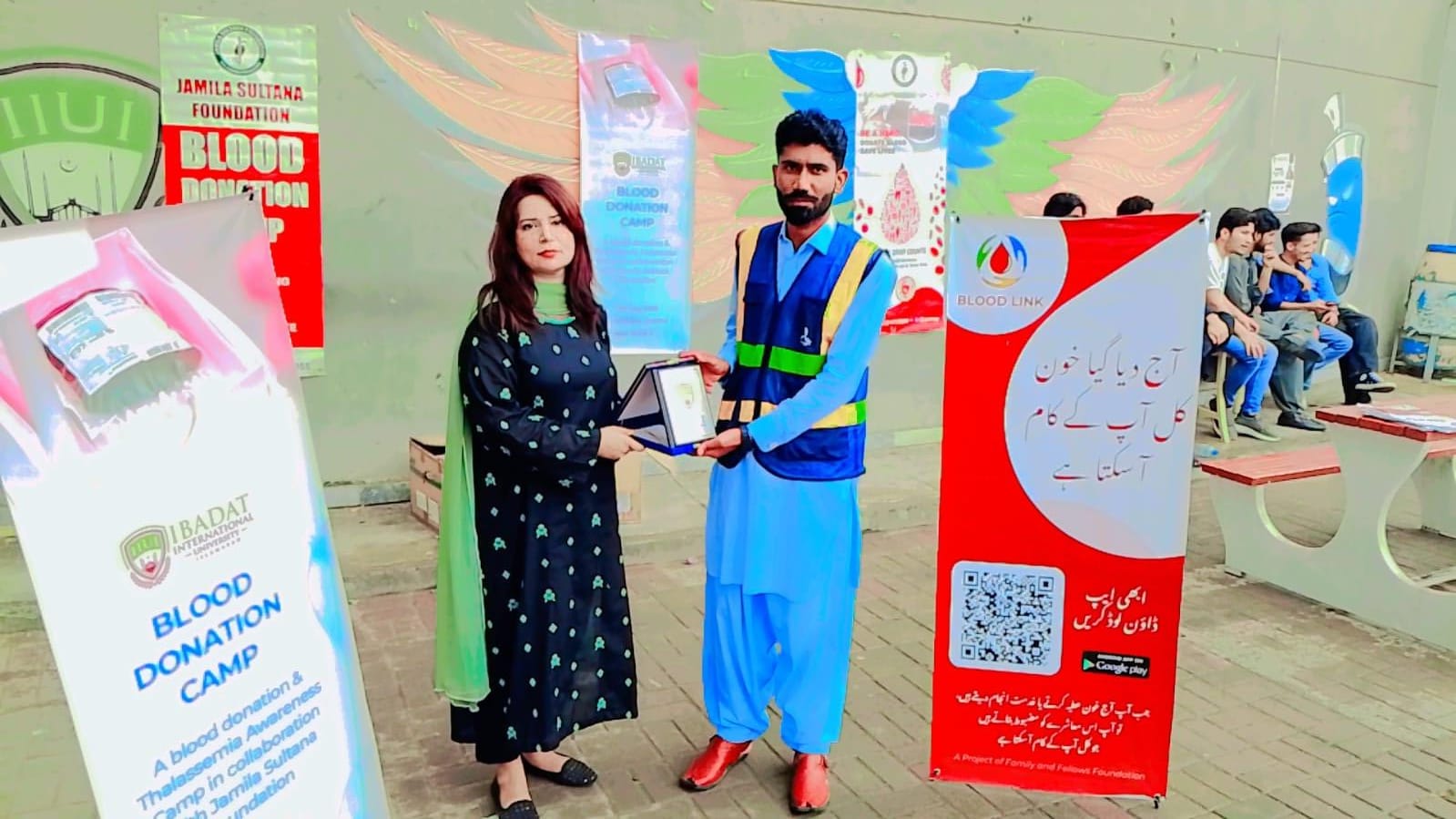
The real question is:
What can the data help us do?
If we know that 1,000 people registered as donors, can we actually reach them?
If we know that 200 people donated, do we know when they can potentially donate again?
If we received 100 blood requests, do we know how many were fulfilled?
If 30 requests went unfulfilled, do we know why?
If volunteers coordinated 50 emergencies, do we recognise their contribution?
If one blood group repeatedly creates difficulty, do we know where to recruit more donors?
Good technology should turn data into actionable information.
The Importance of Closing the Loop
One of the most important characteristics of a mature system is the ability to close the loop.
A blood request should not simply disappear after it is circulated.
Ideally, we should eventually know:
Request received -> donor identified -> donor contacted -> donor accepted -> donation completed -> request fulfilled
Or:
Request received -> donor search -> unsuccessful -> request remained unfulfilled
Both outcomes contain information.
A successful request tells us what worked.
An unsuccessful request tells us where the system failed.
Without closing the loop, organisations may continue repeating the same mistakes without knowing where their operational weaknesses actually are.
What Technology Can - and Cannot - Do
There is a temptation to promise too much when talking about technology.
We do not want to do that.
Technology cannot create blood.
It cannot make an ineligible person eligible.
It cannot force someone to donate.
It cannot guarantee that a rare blood group will always be available.
It cannot replace medical professionals.
It cannot replace blood banks.
It cannot replace human compassion.
But it can organise information.
It can connect people.
It can reduce repetitive work.
It can make donors more visible within an appropriate network.
It can record contributions.
It can help organisations understand their operations.
And it can potentially turn fragmented information into useful intelligence.
That is where the opportunity lies.
Why Building an Ecosystem Takes Time
There is another reality that needs to be acknowledged.
You cannot build a functioning ecosystem simply by launching software.
A network becomes valuable because people participate in it.
Donors need to register.
They need to remain connected.
Organisations need to use the systems.
Volunteers need to participate.
Universities need to engage.
Hospitals and blood banks need to cooperate.
Data needs to be maintained.
Processes need to improve.
Technology needs to evolve based on actual operational experience.
This means that building a blood-donation ecosystem is not a one-time software project.
It is an ongoing systems-building exercise.
What We Have Learned Building Blood Link
Our experience has made one thing increasingly clear:
The technology is often easier than the ecosystem.
Building an application is one challenge.
Getting people to use it consistently is another.
Recruiting donors is one challenge.
Keeping them engaged is another.
Signing an institutional partnership is one challenge.
Turning that partnership into regular operational activity is another.
Creating a donor database is one challenge.
Keeping it accurate and useful is another.
Recruiting volunteers is one challenge.
Keeping them from becoming overburdened is another.
These realities have shaped the direction of Blood Link.
We are not trying to solve everything with a single feature.
We are trying to understand the system and build the pieces that address its different weaknesses.
Why We Chose to Build Beyond Blood Link
Blood Link began with a straightforward question:
Can technology make it easier to connect blood donors with people who urgently need blood?
The more we worked on the problem, the larger the question became.
How are donor records maintained?
How do organisations manage thousands of donors?
How do we know which donors have contributed?
How do volunteers coordinate requests?
How do we measure what is actually being fulfilled?
How do we identify gaps in donor coverage?
How do we understand recurring demand?
How do we move from emergency reaction toward better preparedness?
The answer was not another feature inside one app.
The answer was an ecosystem.
Three Technologies, Three Different Jobs
This is why our technology work is developing around three complementary systems.
Blood Donor OS - Organise
Helping organisations manage their donor information and operational records.
Its job: organise the network.
Blood Link - Connect
Connecting genuine blood requirements with voluntary donors who may be able to help.
Its job: mobilise the network.
BIMS - Understand
Exploring how wider information and data can help identify patterns, demand and gaps.
Its job: understand the environment around the network.
Together:
Organise. Connect. Mobilise. Understand. Improve.
That is much larger than an app.
The Future Is Not About One Platform
It is tempting to ask:
"What is the one application that will solve blood donation?"
We do not think that is the right question.
The better question is:
"What infrastructure does a healthy blood-donation ecosystem need?"
It needs donors.
It needs accurate information.
It needs organisations capable of managing that information.
It needs communication.
It needs volunteers.
It needs hospitals and blood banks.
It needs institutional partnerships.
It needs recognition.
It needs measurement.
It needs intelligence.
And it needs technology capable of connecting these layers.
No single organisation necessarily needs to own all of them.
But they need to be capable of working together.
Building for the Donor, the Volunteer and the Organisation
A good ecosystem should create value for everyone participating in it.
For the donor
A more visible and meaningful place within a voluntary donor network.
For the patient
A better chance of connecting with a suitable donor when a genuine need arises.
For the volunteer
Less repetitive searching and better recognition of meaningful contribution.
For the organisation
Better donor records, operational visibility and reporting.
For universities and institutions
A structured way to engage communities in voluntary blood donation.
For hospitals and blood banks
A potentially stronger surrounding donor network.
For the wider community
A more organised culture of voluntary blood donation.
When technology serves all of these participants, it becomes infrastructure rather than simply an application.
The Bigger Goal: Make Generosity More Organised
People are already generous.
Communities already help.
Volunteers already spend their time.
Donors already give blood.
The problem is not that nothing exists.
The problem is that much of what exists is fragmented.
One donor has a phone number.
Another donor is in a spreadsheet.
A volunteer has a WhatsApp group.
A hospital has a request.
An organisation has a paper register.
A university has thousands of students.
A blood bank has operational information.
The potential is enormous.
But the connections between these pieces are often weak.
Technology cannot create generosity.
It can help organise it.
The Blood-Donation Ecosystem of Tomorrow
Imagine a future in which a person decides to become a voluntary blood donor.
They register once.
Their information is securely maintained.
Their contribution history follows them.
They remain connected to the donor community.
When a genuine need arises, a relevant request can reach potential donors.
Volunteers can see what requires human intervention rather than manually searching through hundreds of contacts.
Organisations can understand their donor networks.
Hospitals and blood banks can remain connected to the surrounding ecosystem.
Successful donations can be recorded.
Volunteer contributions can be recognised.
And accumulated information can help organisations understand where the system needs strengthening.
That is a very different model from:
"Someone needs blood. Please forward this message."
From Emergency Appeals to Preparedness
There will always be emergencies.
There will always be patients who need blood urgently.
There will always be requests that arrive with very little warning.
But preparedness can reduce the burden of reacting to every emergency from scratch.
A strong donor network is a form of preparedness.
An accurate donor database is preparedness.
An engaged volunteer community is preparedness.
Institutional partnerships are preparedness.
Operational data is preparedness.
Intelligence about recurring demand is preparedness.
Technology is the infrastructure that can help connect these forms of preparedness.
The Measure of Success Is Not the Number of Downloads
An app can have thousands of downloads and still fail to create meaningful impact.
A donor network can have thousands of registrations and still struggle to fulfil emergencies.
A database can contain millions of records and still be operationally weak.
The more meaningful questions are:
How many genuine requests can the network support?
How quickly can suitable donors be reached?
How many donors remain engaged?
How many contributions are successfully facilitated?
How sustainable is the volunteer network?
How accurately can organisations understand their donor base?
How much better can we make the next response because we learned from the previous one?
Those are the metrics that matter.
Beyond an App
Blood Link started with an app.
But the problem has always been bigger than the app.
The application is one interface into a much larger system.
Behind it are donors.
Behind donors are organisations.
Behind organisations are databases.
Behind databases are volunteers and staff.
Behind emergency requests are patients and families.
Around all of them are hospitals, blood banks, universities, NGOs, communities and institutions.
And connecting these pieces requires more than software.
It requires systems thinking.
It requires experimentation.
It requires operational learning.
It requires collaboration.
And it requires the willingness to recognise that technology is only useful when it solves a real problem for real people.
Building the Infrastructure Around Voluntary Blood Donation
We do not believe that one application will solve Pakistan's blood-donation challenges.
We believe something more useful can be built.
A network in which donors are easier to find.
A system in which organisations can manage donor information properly.
A process in which volunteers are supported rather than exhausted.
A culture in which donor contributions are remembered.
An environment in which institutions can participate meaningfully.
And eventually, an intelligence layer that can help the ecosystem understand where its greatest gaps and opportunities lie.
That is why Blood Link is becoming more than an app.
Blood Donor OS is being developed to organise.
Blood Link is being developed to connect and mobilise.
BIMS is being explored to understand and anticipate.
Together, they represent an attempt to build something larger:
A technology-enabled ecosystem around voluntary blood donation.
Because the future of blood donation should not depend on whether one person happens to know another person with the right blood group.
It should depend on whether we have built a system capable of connecting willing people, reliable information, responsible organisations and genuine need.
And that system is worth building.
Beyond the app is the ecosystem.